|
Jointly commissioned by the Fresno
State Chamber Singers and Chico
State Chamber Singers of California State University
....a dramatic, powerful choral
statement about the anger and chaos of war!
Although some wars may embody noble principles of
freedom and human dignity, the ultimate cost is devastation and
destruction of life. FOR WHOM
THE BELL TOLLS portrays the anger and
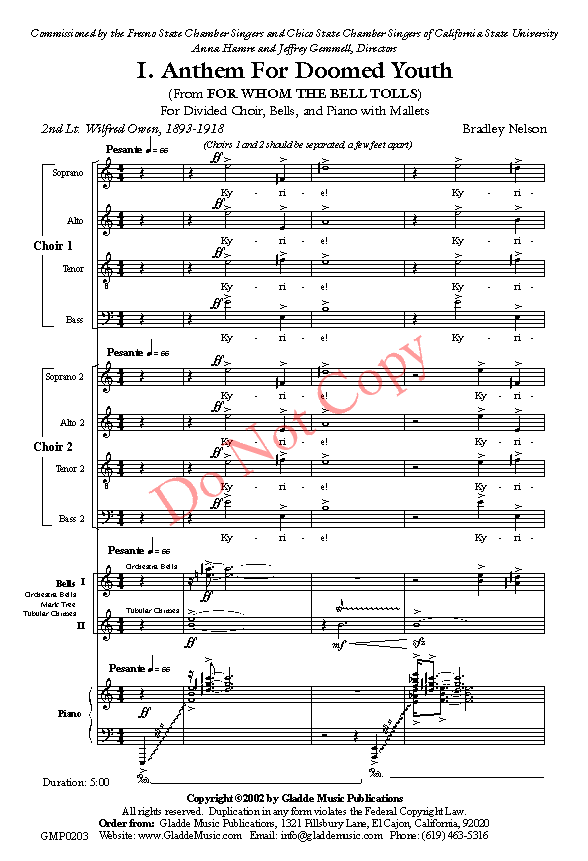
chaos of war ("Anthem For Doomed Youth"),
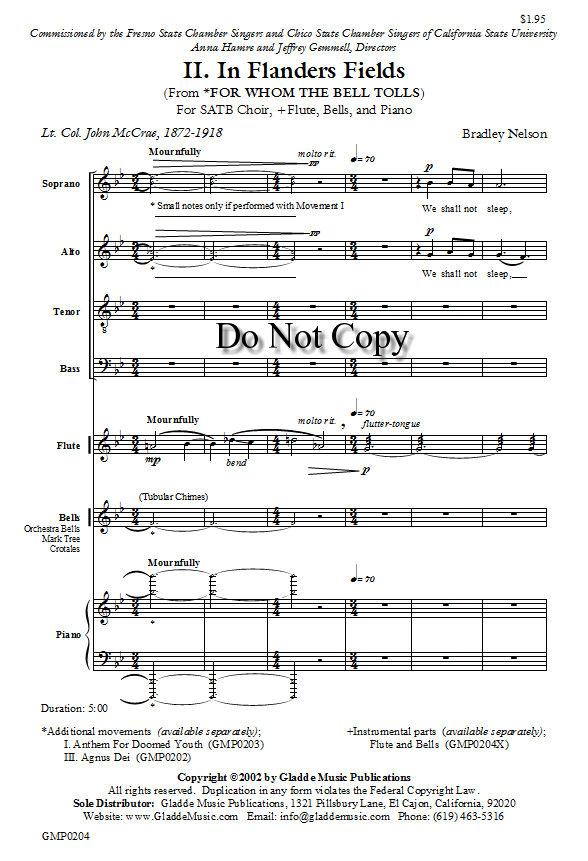
those who perish ("In Flanders Fields"),
and supplication for peace and mercy
("Agnus Dei").
The over-arching title, FOR
WHOM THE BELL TOLLS, was inspired by
images of bells in the first poem. This phrase
was first penned by John Donne in 1624 and later used as the title of Ernest
Hemingway's novel about the Spanish Civil
War. Bell-like instruments provide a unifying timbre
throughout the first two movements. The sounds and
compositional techniques utilized in the music arise from the
severity and haunting sadness of each poem.
"Anthem For Doomed Youth"
was written in 1917 by 2nd Lt. Wilfred Owen, a British officer
killed in battle one week before the war's end in 1918. He
was only twenty-five years old at the time of his
death. Owen's poetry rose to international prominence
through its use in Benjamin Britten's War Requiem. On
November 11, 1918, one week after Owen's death -- at the eleventh
hour of the eleventh day of the eleventh month -- bells were
ringing in Shrewsbury to celebrate the Armistice, when the doorbell
rang at his parent's home.... a courier delivering a telegram....
telling them that their son was dead.
"In Flanders Fields"
was written in 1915 by Lt. Col. John McCrae, a Canadian officer who
also died in 1918 of pneumonia while serving in the medical
corps. This poem is considered one of the most memorable
war poems ever written. Both poets died in the
battlefields of France, only a few months apart.
Overall, the aesthetic scope of FOR
WHOM THE BELL TOLLS is very broad --
from dramatic and dissonant tension to a reflective and eerie
tonality, concluding with a tender and peaceful "Agnus
Dei" drawn from the ancient Latin
text. The emotional profile of the music parallels the
distinctive and contrasting character of each poem.
Click here
for an extensive article published in the Chico Enterprise-Record on
April 10, 2003 |
 Gladde
Music Publications is
now on Facebook! Click on the button below and
"Like" us. You can interact with Brad and share
your comments. Also, post your performance photos, videos,
and recordings!
Gladde
Music Publications is
now on Facebook! Click on the button below and
"Like" us. You can interact with Brad and share
your comments. Also, post your performance photos, videos,
and recordings!
 World
Premiere!
World
Premiere!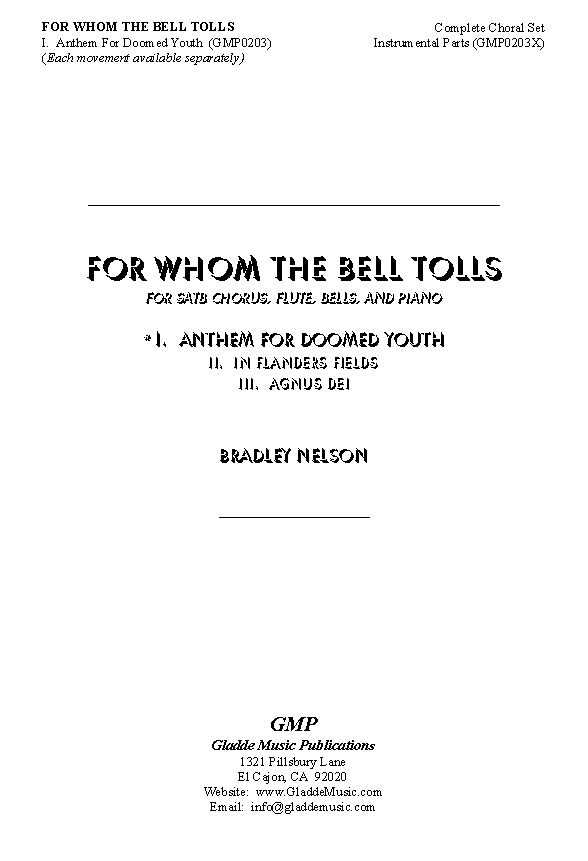
/iii.a001.gif)